The supplier hasn’t listed a price. We can get their current prices and MOQ.
Verify from $29 · written report in 3 business days · 100% refund if not satisfied
The supplier hasn’t listed a price. We can get their current prices and MOQ.
Verify from $29 · written report in 3 business days · 100% refund if not satisfied
From the supplier
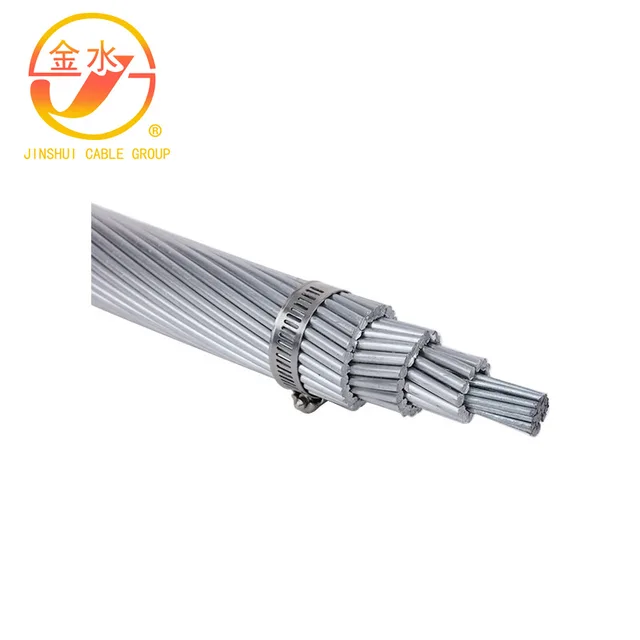
All aluminum alloy conductor
1.Applications:
AAAC aluminum alloy conductors are extensively used for overhead distribution and transmission lines adjacent to ocean coastlines where there can be a problem of corrosion in the steel of an ACSR construction.The inductive effect of the ACSR's steel core is eliminated, hence increasing the operating efficiency of the line.
2.Features and Benefits:
Aluminum alloy conductors have a number of advantages over the use of the ACSR or all aluminum conductors. Lower power losses than for equivalent single aluminum-layer ACSR conductors. (The inductive effect of the steel core in the ACSR is eliminated).
• Simpler fittings than those required for ACSR.
• Excellent corrosion resistance in environments conducive to galvanic corrosion in ACSR.
• Strength and sag approximately the same as for equivalent 6/1 and 26/7 ACSR conductors.
•Outside diameters are the same as for standard ACSR conductors, permitting interchangeability of fittings.
• Greater resistance to abrasion than that for 1350 wires in all-aluminum or ACSR conductors.
Key Benefits:
· High tensile strength as compared to AAC conductor.
· Higher conductivity as compared to ACSR conductor.
· Better corrosion resistance than ACSR conductor.
3.Physical contents of alluminium alloy :
· Density - 2.70 kgm/dm3 at 20°C
· Coefficient of Linear Expansion - 23 x 10-6 / °C
· Resistivity - 0.0326 Ohms mm2/m at 20°C
· Constant Mass Temperature Coefficient (a) - 0.00360/ °C
· Material - Heat treated Al. Mg. Si. Alloy
From the supplier
All aluminum alloy conductor
1.Applications:
AAAC aluminum alloy conductors are extensively used for overhead distribution and transmission lines adjacent to ocean coastlines where there can be a problem of corrosion in the steel of an ACSR construction.The inductive effect of the ACSR's steel core is eliminated, hence increasing the operating efficiency of the line.
2.Features and Benefits:
Aluminum alloy conductors have a number of advantages over the use of the ACSR or all aluminum conductors. Lower power losses than for equivalent single aluminum-layer ACSR conductors. (The inductive effect of the steel core in the ACSR is eliminated).
• Simpler fittings than those required for ACSR.
• Excellent corrosion resistance in environments conducive to galvanic corrosion in ACSR.
• Strength and sag approximately the same as for equivalent 6/1 and 26/7 ACSR conductors.
•Outside diameters are the same as for standard ACSR conductors, permitting interchangeability of fittings.
• Greater resistance to abrasion than that for 1350 wires in all-aluminum or ACSR conductors.
Key Benefits:
· High tensile strength as compared to AAC conductor.
· Higher conductivity as compared to ACSR conductor.
· Better corrosion resistance than ACSR conductor.
3.Physical contents of alluminium alloy :
· Density - 2.70 kgm/dm3 at 20°C
· Coefficient of Linear Expansion - 23 x 10-6 / °C
· Resistivity - 0.0326 Ohms mm2/m at 20°C
· Constant Mass Temperature Coefficient (a) - 0.00360/ °C
· Material - Heat treated Al. Mg. Si. Alloy
About the supplier
Main products: Cables
- ✓Exhibited at 7 recent Canton Fairs
- ✓Foreign Trade Company
- ✓Founded 2007
- ✓Canton Fair Premium Supplier
- ✓Brand exhibitor
- ✓National high-tech enterprise
Light & Electrical exhibitors show in Phase 1 of the Canton Fair, 15 to 19 October 2026.
- Exhibited at 7 recent Canton Fairs
- Foreign Trade Company
- Founded 2007
- Canton Fair Premium Supplier
More from HENAN JINSHUI CABLE GROUP CO.,LTD