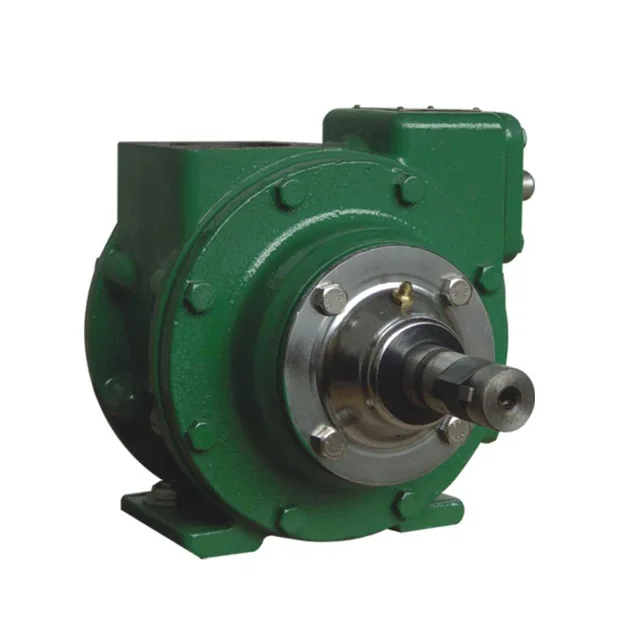
Pump

Price on request
The supplier hasn’t listed a price. We can get their current prices and MOQ.
Verify from $29 · written report in 3 business days · 100% refund if not satisfied
Price on request
The supplier hasn’t listed a price. We can get their current prices and MOQ.
Verify from $29 · written report in 3 business days · 100% refund if not satisfied
About this product
- Size: 12*12*30
- Color: black,blue
- Application: Other
- Usage: Oil
- Fuel: Other
- Theory: Rotary Pump
- Exports to: Africa, Middle East, Southeast Asia, South Asia, Central Asia, USA and Canada, Latin America, Russia
About this product
- Size: 12*12*30
- Color: black,blue
- Application: Other
- Usage: Oil
- Fuel: Other
- Theory: Rotary Pump
- Exports to: Africa, Middle East, Southeast Asia, South Asia, Central Asia, USA and Canada, Latin America, Russia
Product details
| Size | 12*12*30 |
|---|---|
| Color | black,blue |
| Application | Other |
| Usage | Oil |
| Fuel | Other |
| Theory | Rotary Pump |
| Standard | Standard |
| Structure | Gear PumpOther |
Product details
| Size | 12*12*30 |
|---|---|
| Color | black,blue |
| Application | Other |
| Usage | Oil |
| Fuel | Other |
| Theory | Rotary Pump |
| Standard | Standard |
| Structure | Gear PumpOther |
From the supplier
A gear pump is a positive-displacement rotary pump, whose core working principle relies on the rotational movement of one or more pairs of intermeshing gears inside the pump housing. When the gears rotate, the space between the gear teeth creates a negative pressure in the suction chamber, drawing the fluid in. Subsequently, the sucked fluid is carried into the discharge chamber by the meshed tooth surfaces of the gears; as the teeth mesh and squeeze, the fluid is pressurized in the discharge chamber and delivered to the downstream pipeline.
Gear pumps feature a simple and compact structure, with a small number of components, low manufacturing costs, and strong pollution resistance—they are not sensitive to impurities in the conveyed fluid. Thus, they are widely used in fields such as petroleum, chemical engineering, and mechanical lubrication, especially suitable for conveying high-viscosity fluids (e.g., lubricating oil, diesel oil).
A vane pump is also a positive-displacement pump, whose working components consist of a rotor, vanes, and a stator. The rotor is mounted eccentrically inside the stator; when the rotor rotates around its axis, the vanes slide tightly against the inner surface of the stator under the action of centrifugal force and pressure oil, forming multiple sealed working chambers between the rotor, vanes, and stator. As the rotor rotates, the volume of the working chamber gradually increases in the suction area to draw in the fluid; after entering the discharge area, the volume of the working chamber gradually decreases to pressurize and discharge the fluid.
The notable advantages of vane pumps include uniform flow, stable operation, low noise, small size, and light weight, making them suitable for scenarios requiring high flow stability, such as hydraulic transmission systems, precision machine tools, and injection molding machines. However, vane pumps have high requirements for the cleanliness of the working fluid and are not suitable for conveying fluids with excessively high viscosity or solid particles—otherwise, they may easily cause vane jamming or wear, affecting the service life of the pump.
From the supplier
A gear pump is a positive-displacement rotary pump, whose core working principle relies on the rotational movement of one or more pairs of intermeshing gears inside the pump housing. When the gears rotate, the space between the gear teeth creates a negative pressure in the suction chamber, drawing the fluid in. Subsequently, the sucked fluid is carried into the discharge chamber by the meshed tooth surfaces of the gears; as the teeth mesh and squeeze, the fluid is pressurized in the discharge chamber and delivered to the downstream pipeline.
Gear pumps feature a simple and compact structure, with a small number of components, low manufacturing costs, and strong pollution resistance—they are not sensitive to impurities in the conveyed fluid. Thus, they are widely used in fields such as petroleum, chemical engineering, and mechanical lubrication, especially suitable for conveying high-viscosity fluids (e.g., lubricating oil, diesel oil).
A vane pump is also a positive-displacement pump, whose working components consist of a rotor, vanes, and a stator. The rotor is mounted eccentrically inside the stator; when the rotor rotates around its axis, the vanes slide tightly against the inner surface of the stator under the action of centrifugal force and pressure oil, forming multiple sealed working chambers between the rotor, vanes, and stator. As the rotor rotates, the volume of the working chamber gradually increases in the suction area to draw in the fluid; after entering the discharge area, the volume of the working chamber gradually decreases to pressurize and discharge the fluid.
The notable advantages of vane pumps include uniform flow, stable operation, low noise, small size, and light weight, making them suitable for scenarios requiring high flow stability, such as hydraulic transmission systems, precision machine tools, and injection molding machines. However, vane pumps have high requirements for the cleanliness of the working fluid and are not suitable for conveying fluids with excessively high viscosity or solid particles—otherwise, they may easily cause vane jamming or wear, affecting the service life of the pump.
About the supplier
Changzhou Davis Hydraulic Co.,Ltd.
- ✓Exhibited at 2 recent Canton Fairs
- ✓Manufacturer
- ✓Founded 2022
Manufacturing exhibitors show in Phase 1 of the Canton Fair, 15 to 19 October 2026.
43
trust
- Exhibited at 2 recent Canton Fairs
- Manufacturer
- Founded 2022
Canton Fair booth: 6.0F23 · General Machinery, Small Processing Machinery and Industrial Accessories (140th session)
Similar products from other suppliers
RD series drip irrigation pump
$0.14–$138.89 / unit FOB (≈ from CNY)
~$98.82 landed · 100 pcs
RDZ Drip Irrigation Pump
$0.14–$13.89 / unit FOB (≈ from CNY)
~$17.55 landed · 100 pcs
Slurry pump
$138.89–$1,388.89 / unit FOB (≈ from CNY)
~$998.20 landed · 100 pcs


Price on request
MOQ 1 · Verify for $29