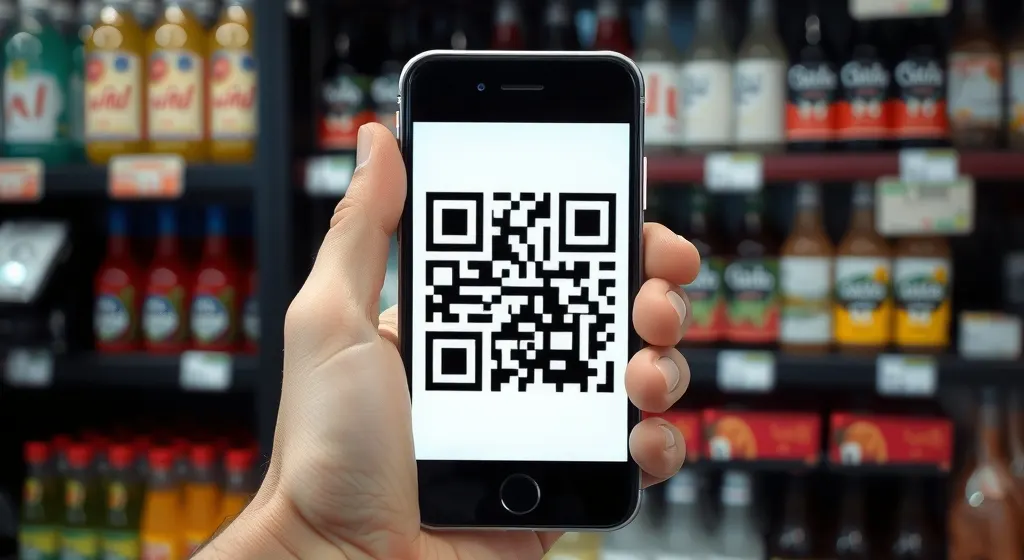
Alipay and WeChat Pay with a foreign card
Cash is legal tender and most places accept it, but the country pays by scanning QR codes, and in a taxi or at a booth the person you are paying expects you to scan. Since 2023 both apps accept international cards directly, and by 2026 the process is quick.
- Install both before you fly and register with your own mobile number (any country). Alipay’s international version is in English throughout; WeChat’s is in English with occasional Chinese.
- Link a card. Visa, Mastercard, JCB, Diners and Discover work on both; American Express support has come and gone, so link a Visa or Mastercard as well. Card number, expiry, CVV, then passport details when the app asks for identity verification, which it does at the first payment or after a small cumulative amount. Verification takes minutes with a clear passport photo.
- Pay. Show your payment code for the merchant to scan, or scan theirs and type the amount. The receipt appears in the app; the charge appears on your card in your currency.
The rules that matter: no fee on transactions up to RMB 200; a 3% fee, charged to you, above that. Foreign-card limits are US$5,000 per transaction and US$50,000 a year on each app. Sample purchases at the fair, taxis, restaurants, the metro and the hotel bar are all well inside the free band. Alipay also has a “Tour Card” you can pre-load from a card if direct linking fails; it is a fallback, not the first choice.
Two more things WeChat does that Alipay does not. It is where every supplier lives, so you will be messaging quotes on it within a day, and a rep can send you a small payment request for a sample which you pay in two taps. And its transport code works at the metro gates in Guangzhou. Set up both apps, and expect to use WeChat more.
Cash and cards
Carry RMB 500 to 1,000. The notes are 100s and everyone can change one. Get them from an ATM after arrival (Bank of China and ICBC machines take foreign cards and give the interbank rate plus your bank’s fee), not from the airport exchange counter, and not by carrying US dollars to change: the counters that used to line the fair have mostly gone. The rate hovers around seven yuan to the US dollar.
Foreign credit cards work in the international hotels, the big malls and the airport, and almost nowhere else. UnionPay is everywhere, but you will not have one. Do not plan on your card for anything outside the hotel.
The internet: what is blocked and what to do about it
On any Chinese network, including your hotel’s Wi-Fi and a local SIM, the following do not load: Google (search, Gmail, Maps, Drive, Docs), WhatsApp, Facebook, Instagram, X, YouTube, Telegram, Signal, most Western news sites, and a shifting set of others. Apple’s services work (iMessage, iCloud, Apple Maps, FaceTime). Microsoft 365 and Outlook mostly work. Slack and Zoom are unreliable. Your bank’s app usually works.
There are three ways to keep your normal phone working, and they are not equal.
eSIM, local SIM or roaming
| Option | Cost for a week | Blocked apps | Notes |
|---|---|---|---|
| Travel eSIM (Airalo, Holafly, Nomad, Saily, Trip.com eSIM and others) | US$10 to 30 for 5 to 20 GB | Work on mobile data, no VPN needed | The data is routed through Hong Kong or Singapore before it reaches the internet, so on cellular you are outside the firewall. On Wi-Fi you are inside it again. Buy and install before departure; it activates when the phone connects in China. |
| Your home carrier’s roaming | US$10 to 15 a day on most plans | Work on mobile data | Same effect as an eSIM, for more money. Fine for a two-day trip. |
| Local SIM (China Mobile, China Unicom) | RMB 50 to 100 | Blocked; you need a VPN | Cheapest data and the best coverage inside the halls. Needs a passport at a carrier shop, twenty minutes, and a VPN that works. |
Our recommendation for a fair trip is a travel eSIM with 10 GB or more, plus a VPN as a backup for the hotel Wi-Fi. Inside the halls, cellular coverage is good and the free Wi-Fi is not worth the login.
VPN
A VPN puts your traffic through a server outside China, which makes the blocked apps work on any connection. Two cautions. VPN websites and app-store listings are themselves blocked, so it must be installed, paid for and tested before you land. And the firewall gets better at spotting them every year; the well-known commercial ones work most days and fail some days, and a second one from a different company is cheap insurance. Use of a VPN by a visiting businessperson to read email is tolerated in practice; it is not something to discuss with officials.
The apps to have installed before you land
- WeChat, with your real name and company on the profile and your WeChat QR on your business card. It is the supplier channel, the translation tool (long-press a message to translate) and the wallet.
- Alipay, card linked, as the second wallet and the way into the Tour Card if needed.
- DiDi for ride-hailing; English interface, foreign cards accepted.
- Apple Maps or Baidu Maps for navigation. Google Maps is blocked and its China data is poor even through a VPN. Apple Maps in China uses local data and is accurate; Baidu Maps is better still and is in Chinese.
- Trip.com for hotels and train tickets, including the Hong Kong high-speed trains.
- The Canton Fair app for the exhibitor list, booth search and the floor plans, and the QR badge.
- A translation app with an offline pack. Google Translate works offline once the Chinese pack is downloaded; the camera mode reads signs and menus.
- A power bank. Ten hours of QR codes, photos and maps empties a phone by 15:00. The halls have charging counters; the queue is long.
Sockets in China are 220 V and take flat two-pin plugs (US style, without the ground) and the three-pin angled plug used in Australia. European round pins need an adapter; hotels lend them.
With the phone sorted, the remaining question is what the trip adds up to: see the budget guide.
Questions we get asked
Does WhatsApp work in China?
Not on Chinese networks or Wi-Fi. It works on a roaming eSIM or on your home carrier’s roaming, because that data leaves China before it reaches the internet, and it works through a VPN. Suppliers will not be on it anyway; they use WeChat, and you should too.
Do I need cash in Guangzhou?
A little. With Alipay or WeChat Pay linked to a foreign card you can go a week without notes. Carry RMB 500 to 1,000 for the taxi driver whose phone is flat, the market stall, and the day the app decides to re-verify you. Airport ATMs from Bank of China and ICBC accept foreign cards.
Can I pay a supplier deposit by WeChat Pay?
You can, and you should not. A WeChat or Alipay transfer goes to a personal account, is instant and is unrecoverable. Deposits go by bank transfer to the company account named on the proforma invoice, after verification. WeChat Pay is for samples, taxis and lunch.
Will my bank block the transactions?
Sometimes on the first one. Tell your card issuer you will be in China, and link two cards from different banks. Some UK and Indian debit cards do not link at all; a Visa or Mastercard credit card from a major bank is the safe choice.
Is it worth getting a Chinese phone number?
For a week, no. An eSIM gives you data and everything runs over data. A Chinese number is useful only if you are staying longer or need to register for local services, and it requires a visit to a carrier shop with your passport.